Studio Art, Graphic Design, and Music
Two of the elective options are music business and music management, and creative careers are overwhelmingly self-employed.


Starting something is a skill, and it can be taught. The Entrepreneurship minor takes you through the full arc of building a venture: finding an opportunity worth pursuing, testing it against real customers, understanding the money and operations underneath it, and launching. You do it alongside a working startup incubator, and you can do it from any major on campus.
The minor is built around Lean Startup methodology rather than case studies about other people’s companies. You practice idea generation, opportunity analysis, and customer discovery, then build a minimum viable product and gather evidence from actual customers that validates or invalidates your idea before you commit to building a company. The financial and operational coursework targets the same goal: managing scarce resources and operating with unknown variables, which is what a startup environment actually feels like.
The other half of the case is who it’s for. The foundations course is explicitly interdisciplinary and open to all majors, and the elective columns reach into healthcare, music, sport, and theatre management as well as business. An entrepreneurial venture in your field is a different thing from a general business plan, and the minor is structured to let you build the one you actually care about.
A minor's value is in how it complements your major. Entrepreneurship is deliberately open to every major, and pairs especially naturally with:
Two of the elective options are music business and music management, and creative careers are overwhelmingly self-employed.
Healthcare Organization and Management sits in the elective list, and the clinical and wellness fields are full of independent practices.
Theatre Management is an approved elective, and producing is entrepreneurship by another name.
Management of Sport is an approved elective, and the industry runs on independent agencies, clubs, and events.
The venture-creation sequence is not duplicated anywhere in the business core.
The Entrepreneurship minor is 20 credit hours: three required courses in the venture sequence plus eight hours of electives you choose.
| Course | Title |
|---|---|
| ENT 1100 | Entrepreneurship Foundations 4 |
| ENT 2100 | New Venture Finance and Operations 4 |
| ENT 3575 | New Venture Creation 4 |
Choose eight hours from Group A, Group B, or a combination.
| Course | Title |
|---|---|
| BUS 2100 | Introduction to the Philosophy of Business 4 |
| BUS 2217 | Principles of Management 4 |
| BUS 3125 | International Business Environment 2 |
| BUS 3311 | Legal Environment of Business 4 |
| BUS 4430 | Business Ethics, Communication, and Risk Management 4 |
| HCM 2125 | Healthcare Organization and Management 4 |
| MKT 3160 | Marketing Principles 4 |
| MUS 2253 | Introduction to Music Business 2 |
| SPM 2174 | Management of Sport 4 |
| THE 3330 | Theatre Management 4 |
These courses carry prerequisites, but may be a good fit if you have already taken them through your major or another minor.
| Course | Title |
|---|---|
| BUS 3666 | Leadership Competencies |
| BUS 4115 | International Management |
| FIN 3888 | Principles of Real Estate Analysis and Valuation |
| MKT 3175 | International Marketing Strategies |
| MKT 3270 | Sales Management and Personal Selling |
| MKT 4466 | Marketing Research |
| MUS 3359 | Music Management |
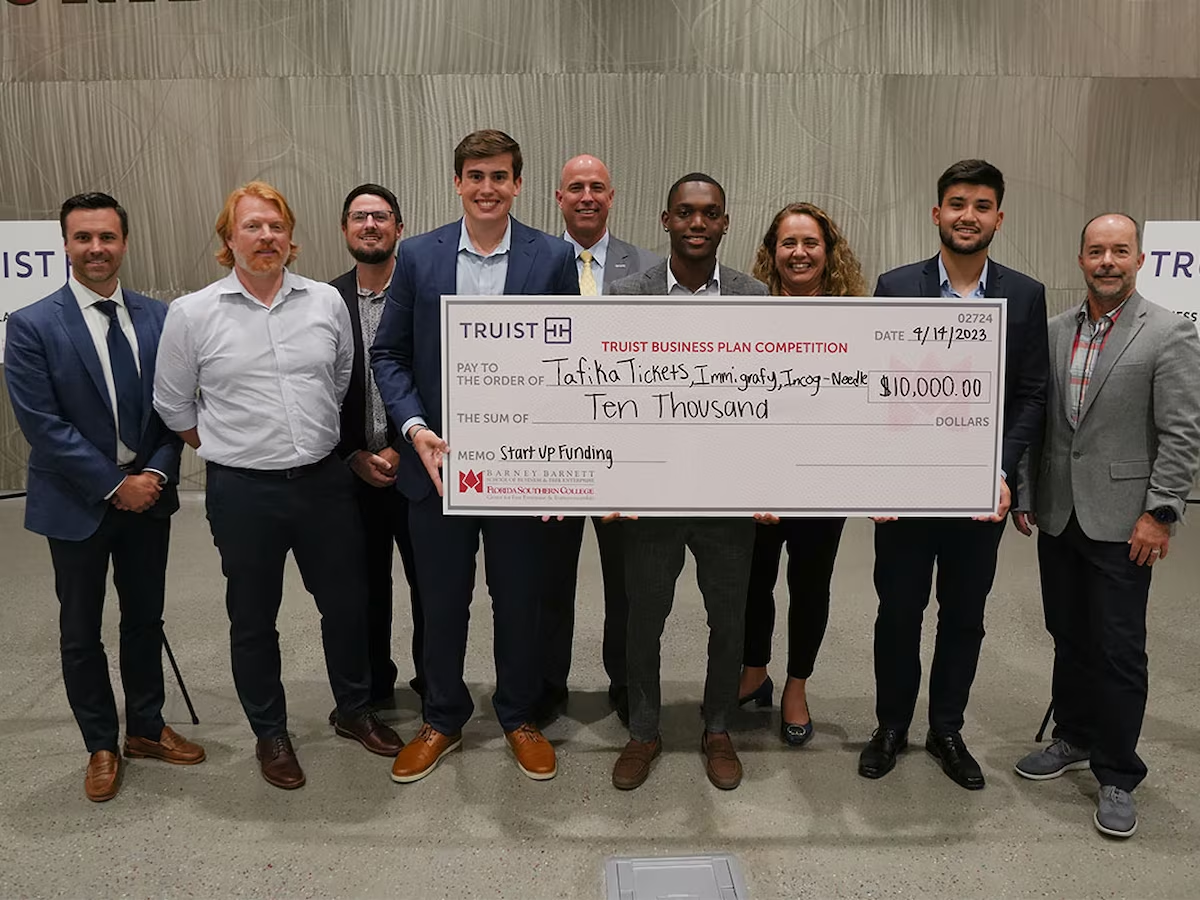
The minor is offered by the Center for Free Enterprise and Entrepreneurship, which means you can directly apply what you're learning. The Center runs a student incubator, a learning lab where interdisciplinary teams operate a real venture, weekly innovation challenges built on problems from industry and government, an annual business plan competition with prize money, and clubs for students focused on free enterprise and social entrepreneurship.

The obvious path is founding something, and some students do exactly that while still enrolled. The less obvious path matters more for most: the same skills that launch a venture - spotting an opportunity, testing it cheaply, understanding unit economics, and operating without complete information - are what distinguish people who advance inside organizations from people who wait to be told. The minor prepares you for startup and small business roles, innovation and product teams, nonprofit and social venture work, family business leadership, and any career where you will eventually have to build something that does not exist yet.
Return it to the Office of the Registrar on the second floor of the Buckner Building, or email it to registrar@flsouthern.edu. Entrepreneurship requires no departmental signature.
Requests are reviewed and updated in the FSC Portal within three to five business days, and you will receive an email confirmation at your FSC Mocs email.
No approval is required to declare, but mapping your electives with the CFEE director and your academic advisor is worth doing early, particularly if you want to take Group B courses.
Questions about the Entrepreneurship minor, or ready to declare?

Director of the Center for Free Enterprise and Entrepreneurship, Entrepreneur-in-Residence
This is a big decision, and we’re here to help you make the choice that’s right for the future you’re imagining. Choose a next step to explore the possibilities at FSC!