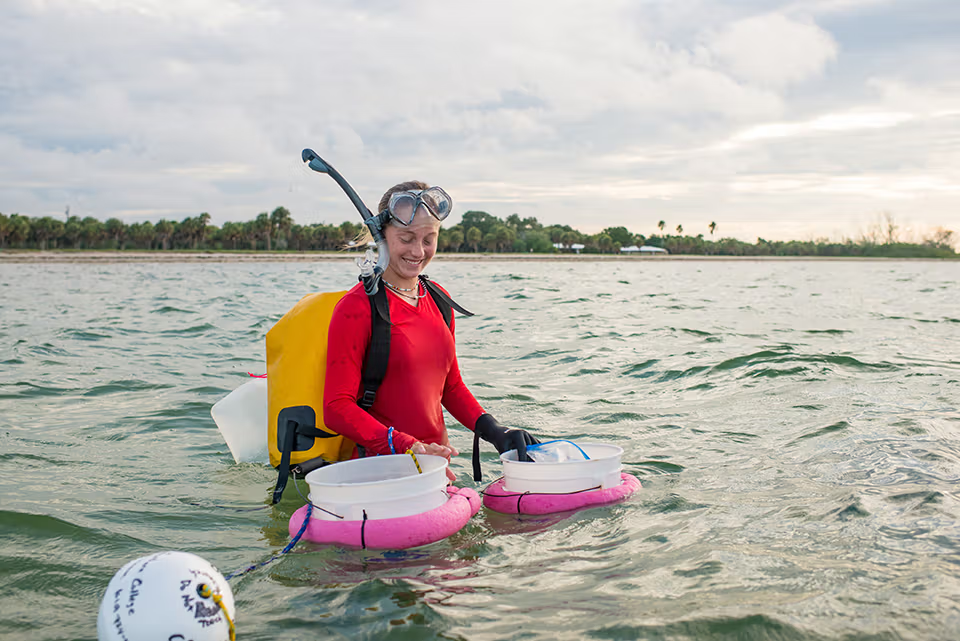
Coastal Environmental Management
Focused on the science, policy, and management of coastal and marine environments.
Prerequisite: ECO 2205 Principles of Microeconomics.


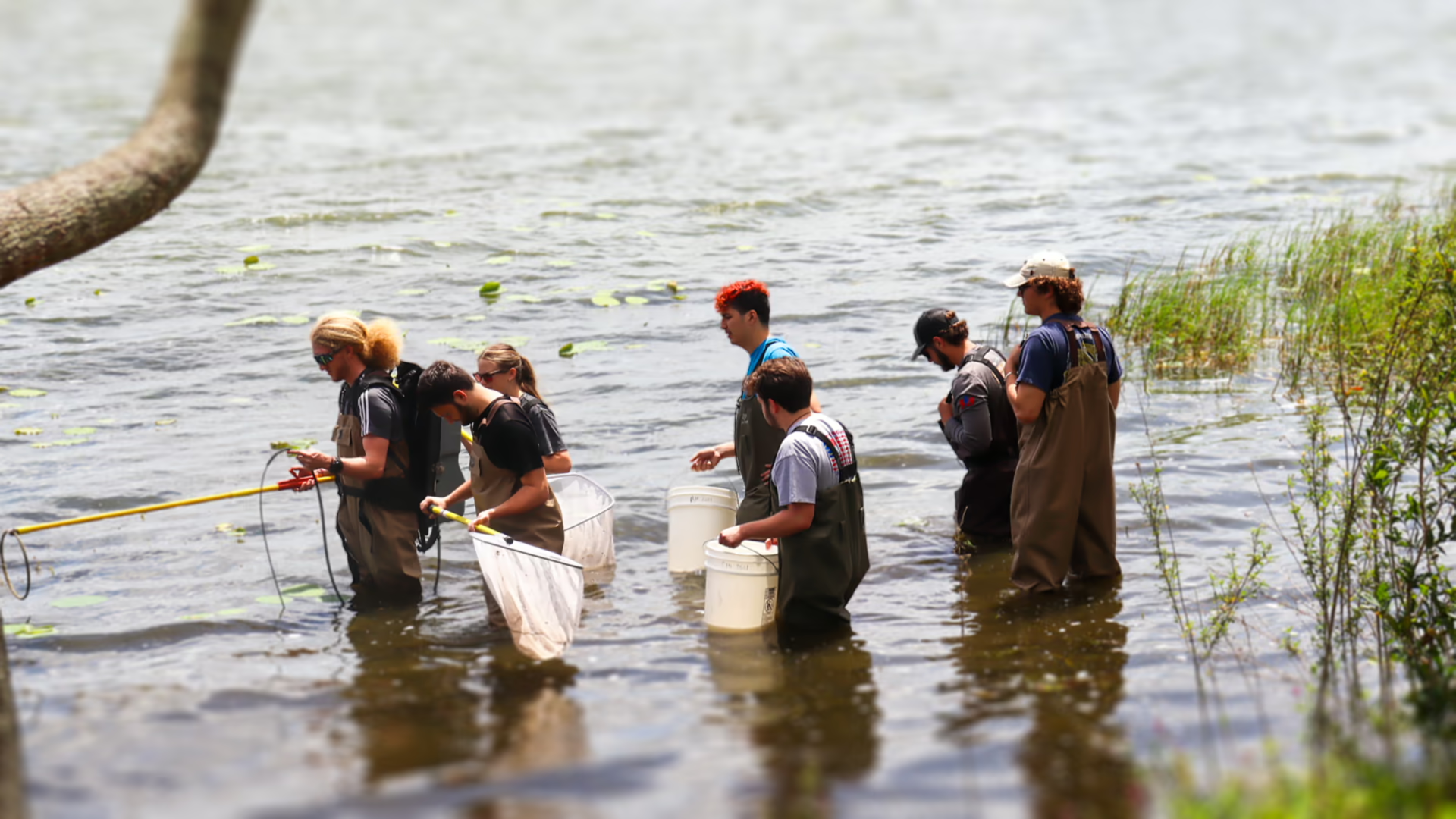
The Nicholas School of the Environment at Duke University is consistently ranked among the nation’s top graduate environmental programs. Through FSC’s cooperative 3-2 agreement, qualified Environmental Studies students can access it without the full competitiveness of a cold graduate school application.
Here is how it works: students spend three years at FSC completing the core requirements of their BA or BS in Environmental Studies. In their fourth year, they transfer to Duke’s Nicholas School to finish their Bachelor’s degree and begin the Master of Environmental Management (MEM) or Master of Forestry (MF) program. By the end of year five, they hold both degrees.
The application deadline for Duke’s Nicholas School professional degree programs is in early January for the following fall. Students are encouraged to begin the advising process with Dr. Kjellmark as early as their freshman year to ensure their course sequence positions them for eligibility.
The Nicholas School offers eight areas of graduate specialization within the Master of Environmental Management and Master of Forestry programs. FSC students majoring in Environmental Studies can pursue any of the following tracks, depending on their interests and the prerequisite coursework they complete at FSC:
Focused on the science, policy, and management of coastal and marine environments.
Prerequisite: ECO 2205 Principles of Microeconomics.

Examines how economic tools and policy frameworks shape environmental outcomes.
Prerequisite: ECO 2205 Principles of Microeconomics.
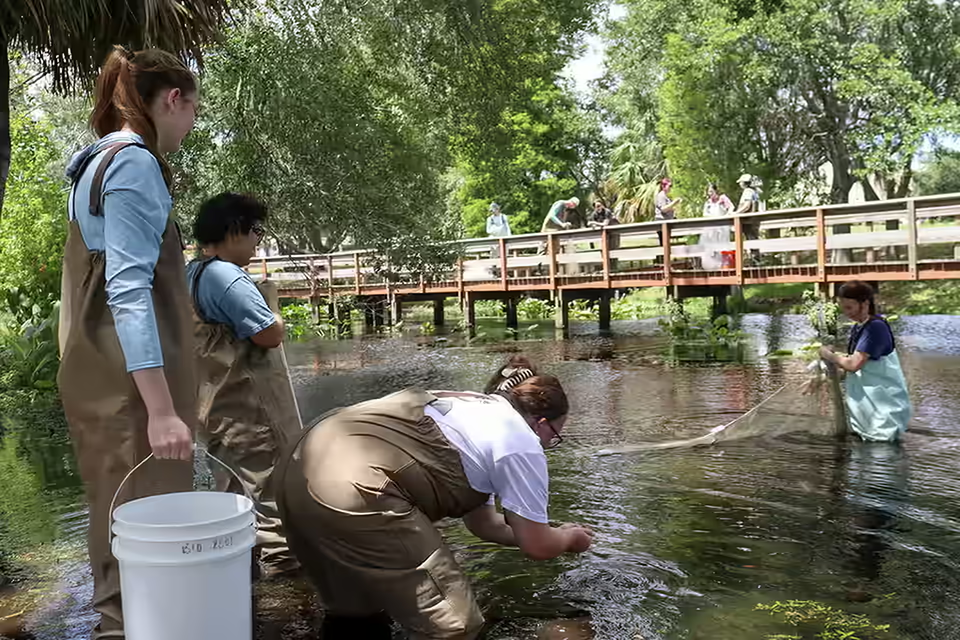
Covers the ecological science behind conservation and natural resource management.
Prerequisites: ECO 2205 Principles of Microeconomics recommended.
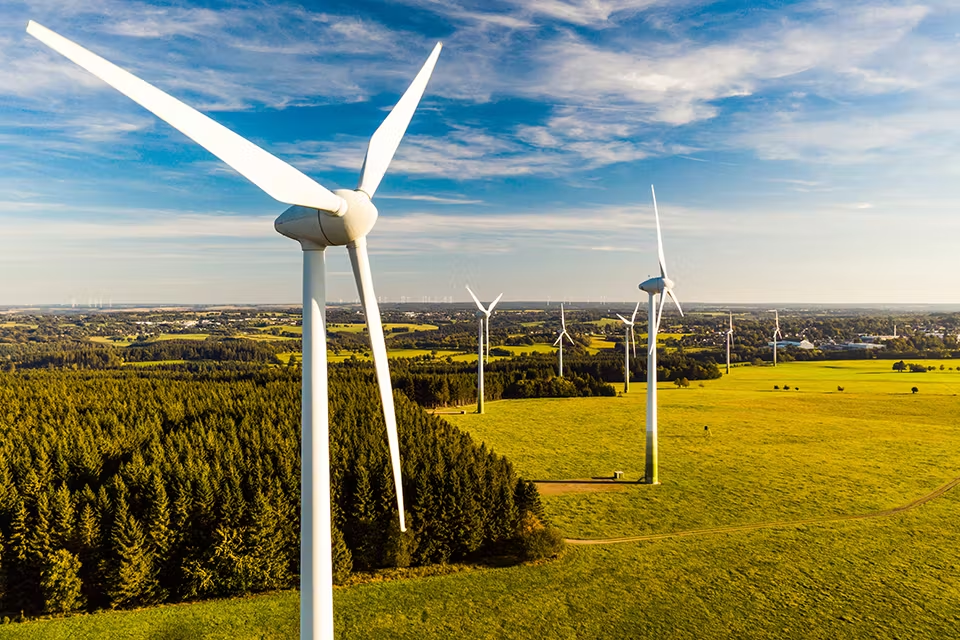
Addresses the intersection of energy systems, climate, and environmental policy.
Prerequisite: ECO 2205 Principles of Microeconomics.
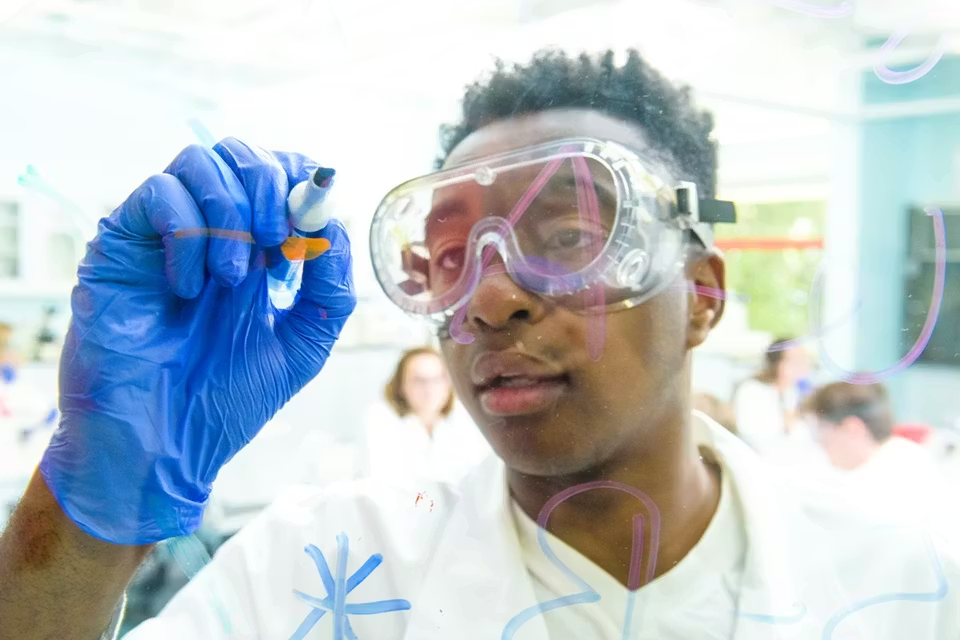
Focuses on the effects of chemical contaminants on ecosystems and human health.
Prerequisites: CHE 1111 Principles of Chemistry I; CHE 2231 Organic Chemistry I and Biology III: Ecology and Evolution recommended.
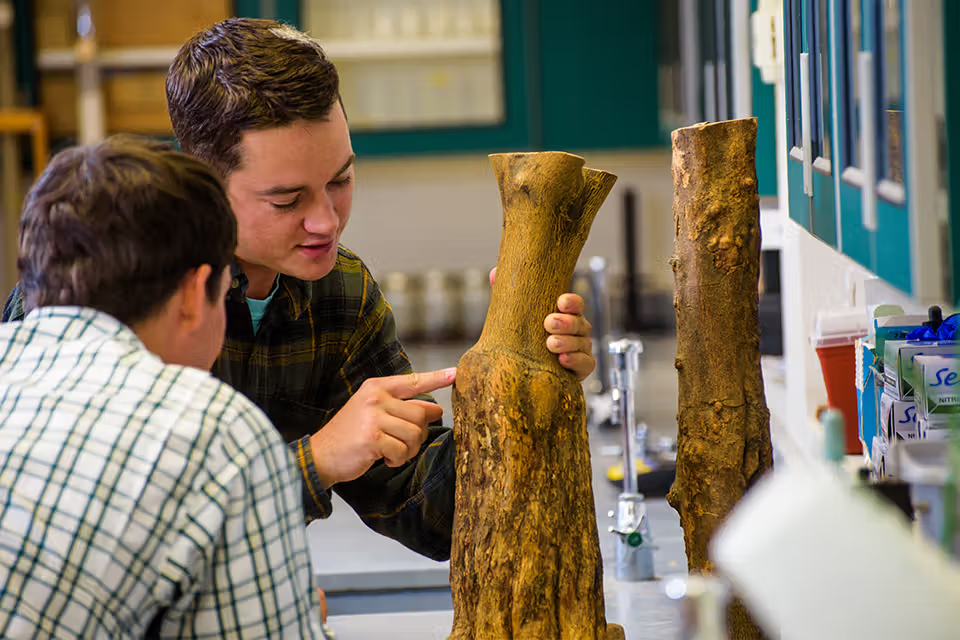
Prepares students for careers in forestry, conservation, and land management.
Prerequisites: ECO 2205 Principles of Microeconomics.
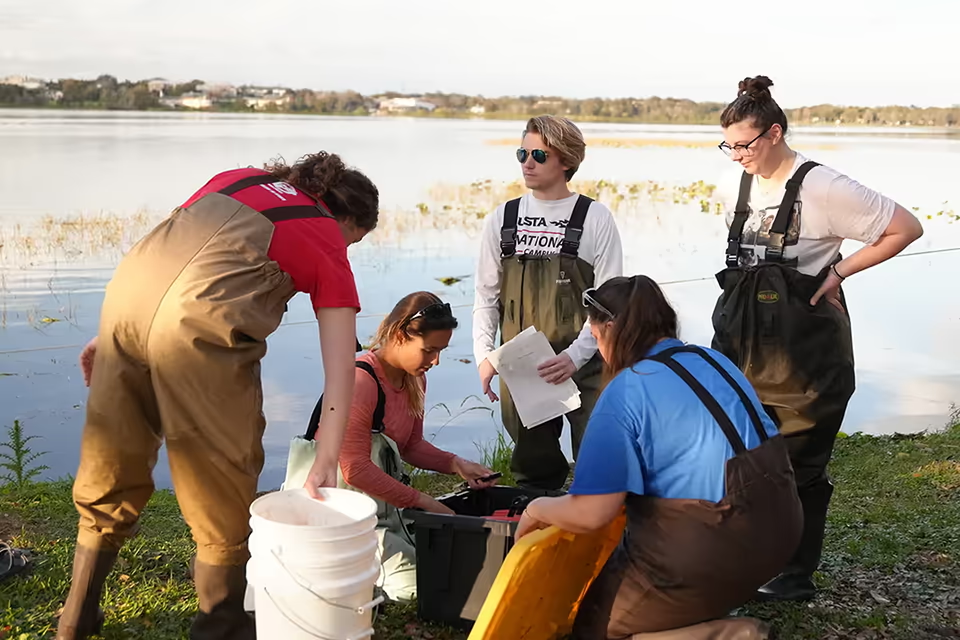
Examines the causes and consequences of global-scale environmental change, including climate.
Prerequisites: An introductory Earth Science course recommended.
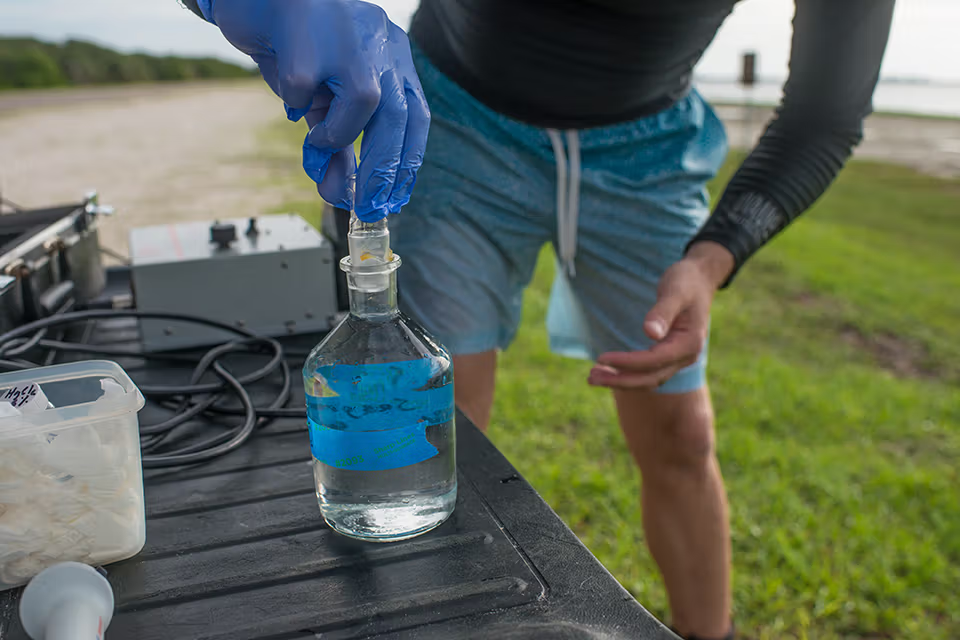
Covers the science and policy of freshwater and water quality management.
Prerequisites: ECO 2205 Principles of Microeconomics; CHE 1111 Principles of Chemistry I and PHY 2010 Physics I (Algebra Based) recommended.
The 3-2 structure is designed to allow students to complete the bulk of their FSC degree requirements in three years while simultaneously completing the prerequisite coursework that Duke requires for admission to the Nicholas School.
Years 1-3 at FSC
Students complete most of the requirements for the BA or BS in Environmental Studies at FSC. With careful advising, students can complete all prerequisite coursework for their chosen Duke specialization track within these three years.
Year 4 at Duke
Students transfer to Duke’s Nicholas School to begin the MEM or MF program. Their first year of graduate coursework simultaneously fulfills the remaining elective hours needed to complete their FSC bachelor’s degree.
Year 5 at Duke
Students complete the master’s degree requirements, which typically include a thesis or applied project depending on the track.
Students who complete this pathway graduate with both an FSC BA or BS in Environmental Studies and a Duke master’s degree in five years rather than the typical six.
Eligibility
Students are eligible to apply to Duke’s Nicholas School if they hold a bachelor’s degree from an accredited institution OR have completed at least three years of study at a college participating in the Cooperative College 3-2 Program, which includes FSC.
Required Prerequisites (all applicants)
Each specialization area has additional specific prerequisites — see the specialization descriptions above for details. The full prerequisite coursework document is available for download below.
Application Deadline
Early January for the following fall semester.
Required Application Materials
The Duke 3-2 pathway is designed for Environmental Studies students who know early that they want to pursue graduate-level environmental work — and want to get there efficiently.
It is particularly well-suited for students interested in environmental policy, conservation science, coastal management, ecotoxicology, or forest resource management who want to combine FSC’s strong undergraduate research foundation with a Duke master’s degree. Students drawn to environmental law or public policy may also find the Environmental Economics and Policy or Global Environmental Change tracks a compelling complement to pre-law preparation at FSC.
Because the three-year FSC sequence requires careful course planning from the start, students who are considering this pathway should connect with Dr. Kjellmark as early as their first semester at FSC.
Duke’s Nicholas School of the Environment is one of the most respected graduate environmental programs in the country — consistently ranked among the top environmental schools nationally. Its eight specialization tracks span the full range of environmental careers, from coastal management and forest resources to energy policy and ecotoxicology.
For FSC Environmental Studies students, the 3-2 cooperative agreement removes one of the most significant barriers to accessing a program of this caliber: the cold, graduate-school application process. Students who have worked closely with Dr. Kjellmark, completed the required prerequisites, and built a strong research and academic record at FSC are well-positioned to make a compelling case for admission.
Interested in the Duke 3-2 pathway? Start the conversation as early as your first semester. Careful advising from the beginning makes all the difference in positioning yourself for eligibility.
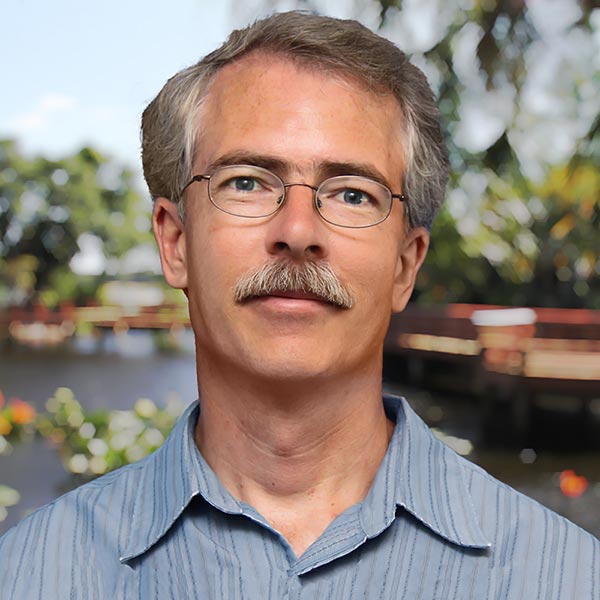
Professor of Biology
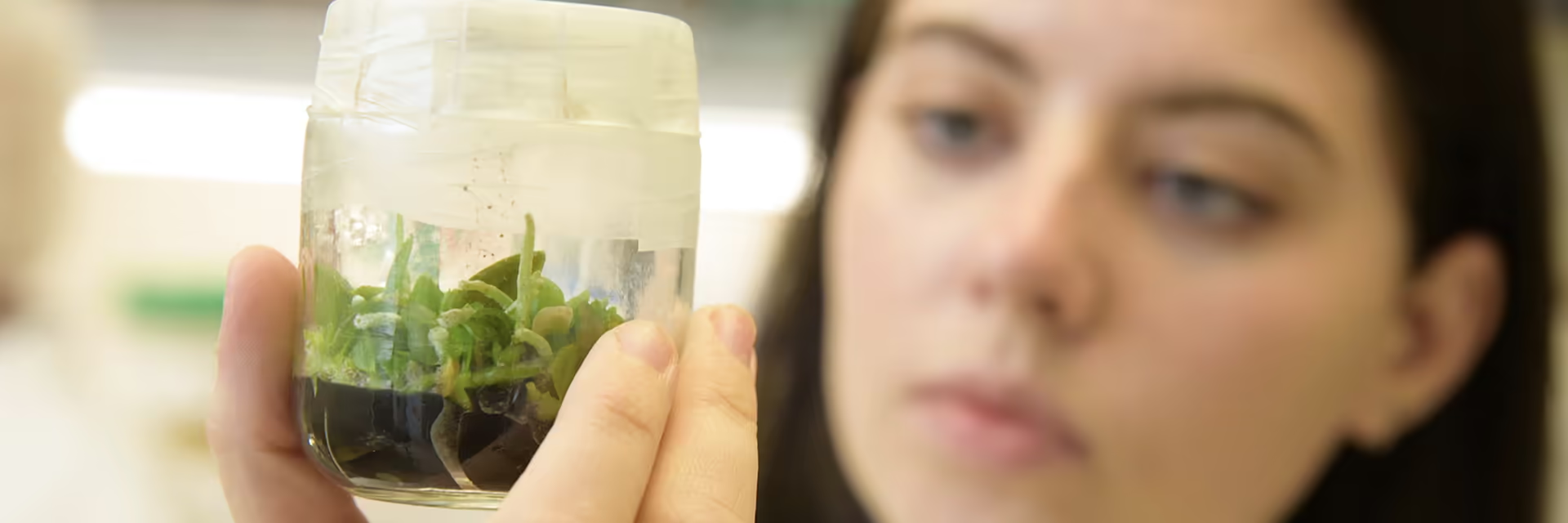
Two degrees. Five years. A direct pathway to one of the nation’s most respected environmental graduate programs. Talk to Dr. Kjellmark to find out if the Duke 3-2 is the right fit for your goals.